GRACO Pump Installation: Expert Guide for NZ Sites
Published On: December 16th, 2025
A well-installed GRACO pump installation is key to long-term performance and efficiency in any industrial setting. Reliable operations depend on more than just good parts; they require precise setup. At Pumpworks, we help engineers, maintenance teams, and project leaders get installations right the first time. Our experience in chemical, food, and wastewater plants means our advice works for real conditions across New Zealand.
In this article, we’ll share practical tips on placement, line connections, safety, and important commissioning checks. This approach makes sure your new system meets technical and safety standards from the start.
Why Precise Setup Matters for NZ Pump Reliability
A pump system performs best only when teams place, align, and connect it correctly. Even small setup errors create faults that lead to leaks, pressure drops, or uneven flow, which disrupt daily operations. New Zealand’s industrial environment, with its varied temperatures and demanding applications, cannot tolerate such errors.
The Risks of Faulty Installation
Skipping proper setup steps leads to mechanical and operational problems that can quickly harm pump performance.
Premature Component Wear: If the pump is not aligned or mounted correctly, it can cause strain and vibration. This makes seals and diaphragms wear out faster, so parts fail before they should.
Reduced Flow Consistency: If air and fluid lines are the wrong size or not routed properly, pressure inside the pump can fluctuate. This affects how accurately the pump doses or mixes in batch processes.
Safety Hazards: Pumps that are not secured well or have the wrong chemical connections can create dangers like high pressure, part failures, or chemical exposure.
The Need for Specialist Installation Guidance NZ
Industrial pump setups often use special materials and connections for different fluids. Standard installation methods do not cover these details.
Complex Material Handling: Chemical and pharmaceutical sites need the right sealing materials and pressure ratings. The installation must make sure the system avoids cross-contamination or material damage.
Environmental Factors:GRACO pump installation advice should include local issues like humidity and salt near the coast. The setup must include the right protection for equipment at NZ coastal sites.
The Pumpworks Approach: Partnership During Installation
The challenges of the NZ environment confirm that installation requires specialised support. We support teams New Zealand’s unique environment means installation needs expert help. We work with teams during GRACO pump installation, offering more than just manuals. We help choose, supply, install, and set up systems with confidence.
Our experience across many industries lets us give advice that fits your site’s procedures. clearly follow each step of the procedure. This collaborative approach promotes understanding and efficient execution.
Teamwork and Clear Steps: We work with your staff so they are involved in the setup. This way, everyone can see how the system fits and works.
Problem Prevention: By being there during setup, we can spot issues like pipe stress or structural problems before they turn into expensive faults. This hands-on support also helps finish installation faster.
Practical Instructions for Pump Placement
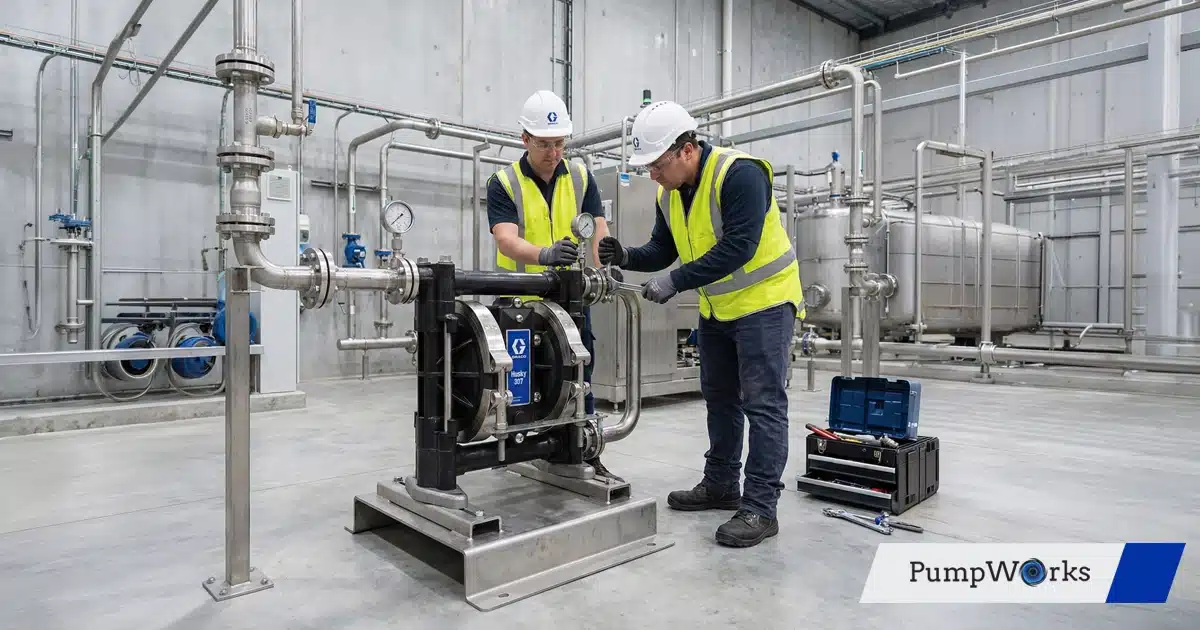
After we start working together, the physical setup begins. Placing the pump correctly keeps it stable, helps it work well, and makes future maintenance easier. We show teams how to position the pump and set up the base the right way.
Base Plate Preparation: We show teams how to make a level, stable base that absorbs vibration and supports the pump’s weight. A strong base is key for reliable pump setup.
Vibration Management: We advise on keeping the pump base separate from the system piping to reduce vibration. This helps prevent stress on the pump and its connections.
Alignment Checks: It’s important to align the motor and pump shaft correctly, especially for electric models. We show teams how to do final checks to avoid too much friction and heat.
The next important step is connecting the air supply and fluid piping, which are the lifelines of the system. Doing this carefully helps prevent early wear and keeps the pump running smoothly.
Guidance for Air and Fluid Line Setup
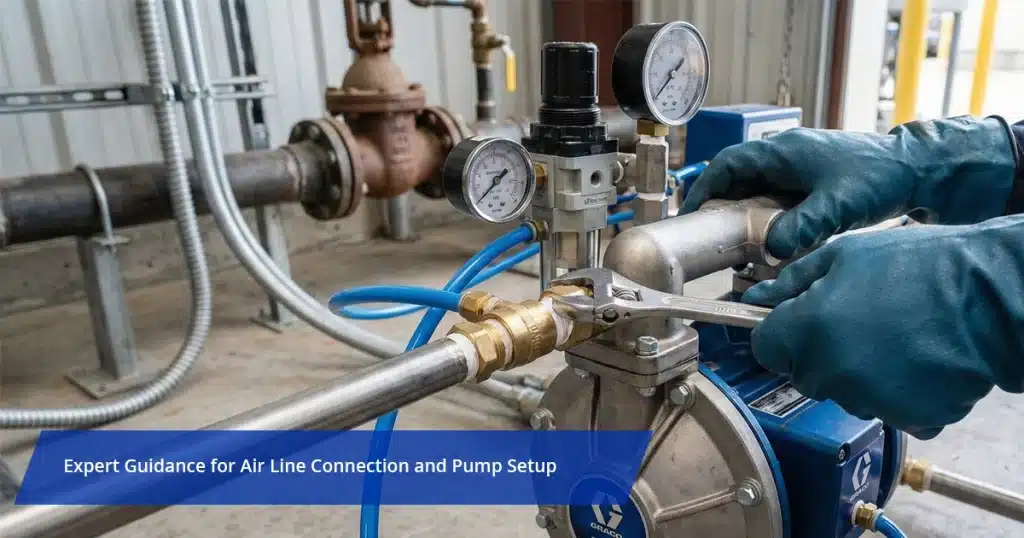
Teams get clear steps for routing lines, checking port sizes, choosing the right fittings, and setting air supply levels.
Line Routing and Port Sizing: We make sure the fluid line diameter matches the pump’s port size to avoid problems like restrictions or cavitation. The lines should be routed so they do not put extra stress on the pump.
Air Supply Optimisation: For AODD pumps, we show how to install filters and regulators so the pump gets clean, dry air at the right pressure. This stops moisture from damaging the inside of the pump.
Correct Fitting Selection: We help teams pick fittings and seal materials that match the fluid, pressure, and temperature. This prevents damage from chemicals at the connections.
Support With Material Choices for NZ Conditions
Installation is the best time to check if materials are compatible. Pump setups often face moisture, salt, heat, or harsh fluids. We explain which materials are best for each site so the GRACO pump fits local conditions.
Fluid Section Materials: We help teams check that the fluid section material, like a certain stainless steel or alloy, can handle the chemicals used. This stops corrosion from the inside.
Diaphragm and Seal Selection: We review the operating temperature and chemical list to ensure the correct elastomer is selected. This choice guarantees the diaphragm resists chemical attack and maintains its precise shape for sealing.
External Protection: For pumps near the coast, we recommend coatings and other protections to fight salt and humidity in the air. This helps the pump system last longer.
Safety and Compliance in Pump System Procedures
After the mechanical and fluid connections are done, the focus shifts to following regulations. Installation must meet local safety rules and industry standards. Our team uses proven safety protocols to protect both your team and the finished product.
Safety Steps During GRACO Pump Installation
At Pumpworks, we follow strict GRACO pump installation safety steps in NZ, such as Job Safety Analysis (JSA), site induction, and clear step-by-step procedures and protocols.
Hazard Identification: We help teams spot hazards at their site, like pressure, movement, chemical contact, or working at height. Our JSA process keeps everyone aware of these risks.
Pressure Mitigation: We confirm all pressure relief valves, bypass lines, and system isolation points are correctly installed and clearly marked before any fluid is introduced. This ensures containment and operational safety.
Lockout Tagout (LOTO): We use LOTO procedures for air and electric power at every stage of setup. This stops the system from starting by accident while people are working.stem.
Compliance Considerations for NZ Industrial Sites
Many sites must follow strict rules for handling food, chemicals, or wastewater. Pumpworks guides teams through installation steps that meet these requirements and keep equipment up to standard.
Sanitary Installation Checks: For food and beverage sites, we check that all connections are sanitary and pipe routes avoid contamination points. These checks meet GRACO requirements and ensure food safety.
Environmental Discharge Rules: In wastewater and chemical industries, we ensure the installation meets all environmental discharge requirements. This includes the correct placement and connection of containment bunds and leak detection systems.
Certification Integrity: We make sure the final setup keeps all explosion-proof (ATEX) and pressure vessel certifications for the GRACO pump.
Commissioning and Verifying Pump Setup Reliability
Once safety is confirmed, the system can be started. Commissioning checks that the pump works as designed in real conditions. This is when the quality of the GRACO pump installation is proven.
Commissioning Support After GRACO Pump Installation
Commissioning includes first-start checks, looking for leaks, confirming flow, and checking for vibration. This careful process help in preventing failure during GRACO pump commissioning.
Pre-Startup Checklist: We work through a detailed GRACO pump installation safety procedures in NZ, covering correct lubrication, fluid levels, and final torque settings on key fasteners. This prevents damage during the first operational cycle. This industrial pump commissioning checklist for NZ engineers would be tailored to your needs.
Performance Testing: We confirm the pump meets its rated output pressure and flow rate against the system head. This ensures the pump commissioning in NZ meets the original design specification.
Vibration and Noise Analysis: During the first run, we check for too much noise or vibration. These signs often mean there is strain or misalignment that needs fixing right away.
Documentation and Recordkeeping During Installation
After checks are done, keeping good records is important. We recommend noting torque values, part numbers, and test results during the process. This careful documentation helps with future troubleshooting and compliance in NZ industries.
Maintenance History: Keeping detailed records of every part and its installation makes future maintenance easier. This saves time when diagnosing problems later.
Compliance Support: Accurate records of pressure tests, material certificates, and safety sign-offs give proof during audits. This creates a clear paper trail for pump system procedures in NZ.
Ensuring Long-Term Support and System Longevity
Our support continues after the pump is running and the paperwork is done. We offer ongoing help to make sure the system keeps up with changing needs.
Ongoing Support for System Adjustments
Your team can contact Pumpworks for more help if your system changes or new needs arise. This ongoing support keeps GRACO pump installations working for your site.
Troubleshooting Assistance: We provide technical support to help teams quickly find and fix problems that come up from changes, like new fluids or pressure needs.
Training and Education: We offer training on daily checks and small adjustments. This keeps your maintenance team skilled and helps the pump setup stay reliable long after installation.
We provide complete GRACO pump installation guidance to ensure safety, meet regulations, and keep your operations running smoothly.
With a passion for solutions, we at PumpWorks get our satisfaction from working with our clients. Pumpworks custom design, custom build and deliver!
Supplying brands and products for the Chemical and Pharmaceutical, Food and Wine, Oil and Gas, Water and Wastewater industries, we understand what is required and what works.